Online Education Vs Offline Education
Education has evolved significantly in the last decade. With technological advancements and changing lifestyles, students and parents now have more choices than ever before. The discussion around online education vs offline education has become one of the most important topics in modern academics. From school students to college learners and competitive exam aspirants, everyone is evaluating which method suits their goals better.
The rise of digital platforms has transformed learning into a flexible and accessible experience, while traditional classroom teaching continues to provide structured discipline and face-to-face interaction. Understanding the real value of both systems helps learners make informed decisions. In this detailed guide, we will explore the comparison, advantages, challenges, and future scope of both formats in a clear and educational manner.
Understanding the Concept of Modern Learning
What Is Online Education?
Online education refers to learning conducted through digital platforms using the internet. Students attend virtual classes, access recorded lectures, submit assignments online, and communicate with teachers through apps or portals. The growth of online platforms has made education accessible to students in remote areas.
This transformation has fueled the conversation around online vs offline education and how each approach impacts learning outcomes. Online systems provide flexibility, allowing students to study from home and manage their own schedule.
What Is Offline Education?
Offline education refers to traditional classroom-based learning where students physically attend schools, colleges, or coaching centers. It emphasizes face-to-face communication, classroom discussions, and structured timetables.
When analyzing the difference between online and offline classes, the key factor is the mode of delivery. Offline education promotes discipline, routine, and real-time teacher-student interaction, which many learners find effective for conceptual clarity.
Online Classes Vs Offline Classes: A Comparative Overview
The debate of online classes vs offline classes is not about which is universally better, but which is suitable for specific learners.
Online classes provide flexibility, recorded lectures, and easy revision options. Students can replay lessons, access digital notes, and attend sessions from any location. This approach works well for self-motivated learners.
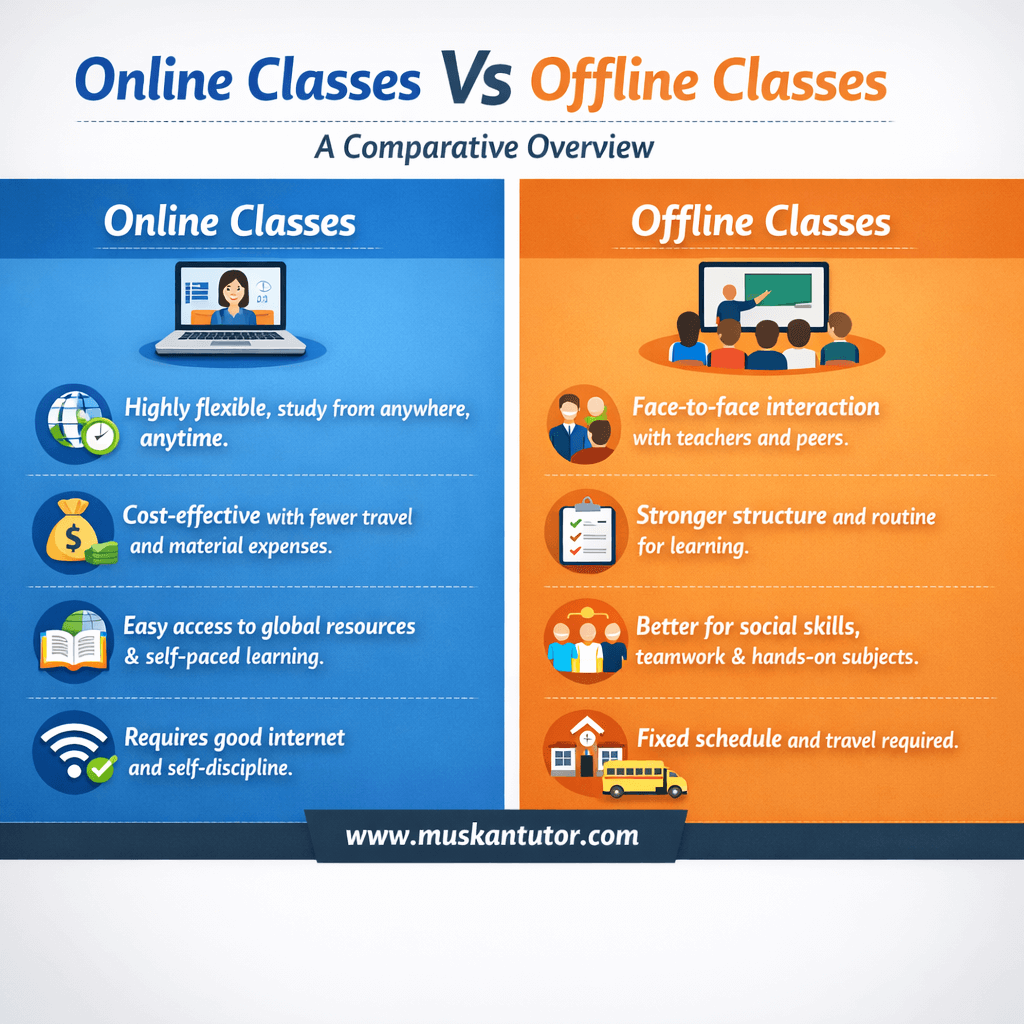
Offline classes offer structured environments and immediate feedback. Students can ask questions directly, participate in group discussions, and engage in hands-on learning activities. For many, physical presence enhances focus and concentration.
In the broader online education vs offline education comparison, personal learning style plays a major role in determining effectiveness.
Flexibility and Convenience
One of the strongest advantages of online learning is flexibility. Students can attend lectures from home, reducing travel time and transportation costs. Working professionals and students preparing for competitive exams benefit greatly from flexible schedules.
On the other hand, offline education follows fixed timings. While this builds discipline, it may limit flexibility for students with other responsibilities.
In the context of online vs offline education debate points, flexibility is often highlighted as the biggest strength of online learning, whereas discipline and structure are strengths of offline systems.
Interaction and Communication
Communication is a crucial element in education. Offline classrooms encourage face-to-face interaction, body language understanding, and spontaneous discussions. Many educators believe that this environment improves engagement and social skills.
Online platforms provide chat features, video conferencing, and discussion forums. However, technical issues or limited internet connectivity can sometimes affect communication quality.
When evaluating the difference between online and offline classes, interaction quality remains one of the most discussed aspects.
Learning Environment and Focus
The environment significantly impacts concentration. Offline classrooms are designed specifically for academic activities, minimizing distractions. Peer presence also encourages healthy competition and motivation.
Online learning environments depend largely on the student’s home setting. While some students perform better in a comfortable home environment, others may struggle with distractions such as social media or household noise.
In the broader discussion of online education vs offline education, environment plays a central role in determining effectiveness.
Cost and Accessibility
Online education often reduces costs associated with transportation, accommodation, and printed materials. Many digital platforms offer affordable courses compared to traditional institutions.
Offline education may involve higher fees due to infrastructure, classroom facilities, and administrative expenses. However, it also provides access to laboratories, libraries, and campus resources that may not be fully replicated online.
These financial considerations are key online vs offline education debate points for parents and students.
Technology and Skill Development
Online learning promotes digital literacy. Students become comfortable with online tools, presentations, and virtual communication platforms. These skills are valuable in modern workplaces.
Offline education emphasizes interpersonal communication and teamwork through group activities and classroom participation.
Understanding the difference between online and offline classes helps learners choose a path aligned with their career goals.
Assessment and Evaluation
Online assessments are usually conducted through quizzes, assignments, and digital exams. While they provide quick results, concerns about academic integrity sometimes arise.
Offline exams are supervised in classrooms, ensuring better monitoring and evaluation standards.
In the broader analysis of online classes vs offline classes, evaluation systems differ significantly but aim to achieve the same academic outcomes.
Social Development and Networking
Offline education allows students to build friendships, participate in extracurricular activities, and develop leadership qualities. Social exposure is often greater in traditional settings.
Online education provides networking opportunities through global webinars and virtual communities. Students can connect with peers worldwide.
This comparison is an essential part of the online vs offline education discussion.
Health and Well-Being
Extended screen time in online education can cause eye strain and posture issues. Maintaining physical health becomes important for online learners.
Offline education involves commuting and physical activity, which may contribute positively to overall well-being. However, long travel hours can also cause fatigue.
Health considerations are increasingly relevant in the online education vs offline education conversation.
Choosing the Right Option
There is no single answer to which system is better. The right choice depends on individual needs, learning style, location, and career goals. Some students benefit from hybrid learning models that combine both approaches.
For students who require personalized attention, hiring a home tutor can be an effective solution. Whether you prefer online or offline sessions, expert guidance can improve academic performance.
Conclusion
The comparison of online education vs offline education highlights that both systems have unique strengths and limitations. Online learning offers flexibility, affordability, and digital skill development, while offline learning provides structured discipline, social interaction, and hands-on experience.
If you are searching for reliable support in both formats, MuskanTutor provides expert home tutors for all classes and subjects. Whether you need online or offline home tuition, professional guidance is available.
For personalized academic assistance, contact MuskanTutor at info@muskantutor.com or WhatsApp +918920580968 to connect with experienced tutors and enhance your learning journey.
Also Read: Which Stream Is Best After 10th
Frequently Asked Questions (FAQs)
What is the main difference between online education vs offline education?
The primary difference between online education vs offline education lies in the mode of delivery. Online learning is conducted through digital platforms, while offline learning happens in physical classrooms with direct interaction.
Which is better online classes vs offline classes?
The choice between online classes vs offline classes depends on the student’s learning style, discipline level, and access to technology. Both methods offer valuable benefits.
What are key online vs offline education debate points?
Important online vs offline education debate points include flexibility, cost, interaction quality, discipline, accessibility, and technology integration.
How does the difference between online and offline classes affect learning outcomes?
The difference between online and offline classes impacts concentration, communication, and evaluation methods, which can influence academic performance.
Can online vs offline education work together?
Yes, many institutions adopt hybrid models combining online vs offline education to provide flexibility along with classroom interaction.
Is online education vs offline education suitable for competitive exam preparation?
Both formats can be effective for exam preparation. The choice in online education vs offline education depends on the learner’s preference for flexibility or structured classroom guidance.