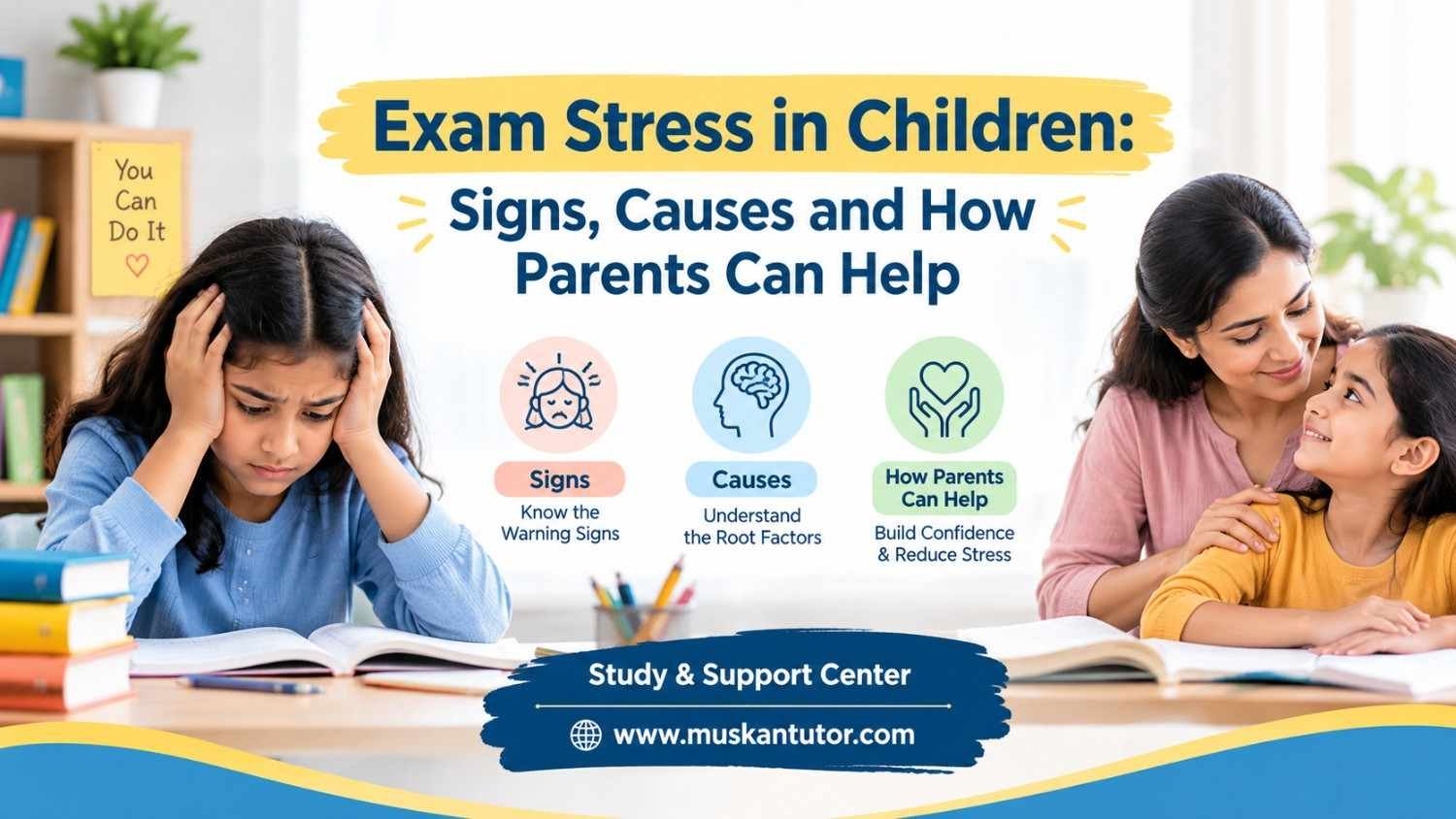
Exam Stress in Children: Signs, Causes and How Parents Can Help
Exam stress in children is a common concern for parents, especially when important school examinations are approaching. A certain amount of pressure can encourage children to prepare and stay focused, but excessive stress may affect their concentration, sleep, confidence, mood, and overall learning experience. Exam anxiety in children can appear differently from one child to another, so parents need to recognize the warning signs and provide the right emotional and academic support.
Examinations are an important part of a child’s education, but they should not become a source of constant fear. With a supportive home environment, realistic study goals, and appropriate guidance, parents can help children approach exams with greater confidence.
What Is Exam Stress in Children?
Exam stress refers to the physical and emotional pressure a child may experience before or during examinations. Some children may feel nervous about their preparation, while others may worry about marks, parental expectations, competition, or disappointing their teachers.
A small amount of nervousness before an exam can be normal. However, when stress becomes intense or continues for a long period, it can interfere with studying and daily life.
Understanding the difference between normal exam nervousness and excessive anxiety allows parents to respond appropriately.
Signs of Exam Stress
The signs of exam stress are not always obvious. Some children openly say that they are worried, while others may show changes in their behavior.
Common signs include:
- Difficulty concentrating while studying
- Frequent headaches or stomach discomfort
- Trouble falling asleep or changes in sleeping patterns
- Irritability, anger, or frequent mood changes
- Avoiding study sessions or delaying preparation
- Crying or becoming unusually emotional
- Fear of getting low marks
- Loss of confidence despite adequate preparation
- Repeatedly asking whether they will perform well
- Feeling tired or overwhelmed
- Changes in eating habits
- Difficulty remembering information during practice or tests
Parents should look for noticeable changes rather than assuming that every sign is caused by examinations. If anxiety is severe, persistent, or affecting a child’s everyday functioning, professional guidance may be appropriate.
Causes of Exam Stress in Children
There can be several causes of exam stress, and they often differ according to the child’s age, personality, academic situation, and environment.
1. Fear of Low Marks
Some children believe that their marks determine their intelligence or future success. This can create unnecessary pressure and fear of failure.
2. High Expectations
Parents naturally want their children to perform well. However, repeated comparisons with classmates, siblings, or relatives can make children feel that their performance determines their value.
3. Lack of Preparation
Leaving the syllabus until the last moment can make studying feel overwhelming. A child may become anxious when there is too much material to revise in a short period.
4. Difficult Subjects
A child who struggles with Mathematics, Science, English, or another subject may develop anxiety when examinations approach, particularly if they do not receive enough academic support.
5. Poor Time Management
Without a practical study routine, children may spend too much time on one topic and then struggle to complete the remaining syllabus.
6. Comparison and Competition
Constant comparison with high-performing students can reduce confidence. Children learn at different speeds, and academic development should not be treated as a race.
7. Previous Negative Experiences
A disappointing result or difficult examination experience can sometimes make a child nervous about future tests.
How to Reduce Exam Stress
Learning how to reduce exam stress is not about removing every challenge from a child’s education. Instead, the goal is to teach children healthier ways to prepare and respond to academic pressure.
Create a Realistic Study Schedule
Help your child divide the syllabus into manageable sections. A practical timetable should include study periods, short breaks, meals, physical activity, and sufficient sleep.
Avoid creating an extremely long schedule that a child cannot realistically follow. Consistency is more useful than studying for many hours without proper breaks.
Focus on Understanding
Encourage children to understand concepts rather than simply memorizing answers. Practice questions, examples, revision exercises, and discussions can make learning more effective.
If a child is struggling with a particular subject, a home tutor or online tutor can provide individualized academic support based on the child’s learning level.
Encourage Regular Breaks
Long periods of continuous study can make children tired and reduce concentration. Short breaks between study sessions can help them return to their work with better attention.
Protect Sleep
Adequate sleep is an important part of healthy learning. Parents should discourage late-night cramming and help children maintain a consistent sleep routine, particularly during examination periods.
Avoid Excessive Pressure
Instead of repeatedly asking about marks, parents can ask questions such as:
- “Which topic are you finding difficult?”
- “How can I help you prepare?”
- “Would you like to revise this together?”
- “Do you need a short break?”
This changes the conversation from performance pressure to practical support.
Parenting Tips for Exams
Good parenting tips for exams focus on encouragement, communication, and realistic expectations.
Parents can:
- Appreciate effort and improvement, not only marks.
- Help children create achievable daily study goals.
- Provide a quiet and comfortable place for studying.
- Encourage questions when a child does not understand a topic.
- Avoid comparing children with siblings or classmates.
- Make time for relaxation and family activities.
- Keep communication open during examination periods.
- Remind children that one examination does not define their abilities or future.
Children need to know that their parents are available to support them even when academic results are not perfect.
Student Stress Management Through Better Study Habits
Student stress management becomes easier when children develop effective study habits throughout the academic year rather than studying only immediately before examinations.
Regular revision, homework completion, practice tests, organized notes, and asking for help early can reduce last-minute pressure. Parents and teachers can also help children identify subjects or topics that require additional attention.
For students who need personalized guidance, MuskanTutor provides home tutor and online tutor services for all classes and subjects. Personalized tutoring can help students understand difficult concepts, maintain a consistent study routine, and prepare according to their individual learning requirements.
The aim should not be to make children study continuously. Instead, effective tutoring should help them learn with greater clarity, confidence, and consistency.
How Parents Can Help Children With Exam Anxiety
When dealing with children’s exam anxiety, parents should first listen instead of immediately giving advice. Ask the child what specifically worries them. The concern may be a particular subject, fear of disappointing parents, difficulty remembering information, or uncertainty about the examination.
Once the underlying concern is understood, parents can work with the child to create a practical solution.
For example, if Mathematics is causing anxiety, breaking the subject into smaller topics and practicing a few questions every day may be more useful than attempting the entire syllabus at once.
If the child is struggling academically despite regular effort, additional support from a teacher or tutor can also be considered.
Most importantly, children should understand that making mistakes is a normal part of learning. A supportive response to mistakes can help them develop resilience and confidence.
Final Thoughts
Exam pressure is a part of academic life, but children should not feel that their entire future depends on a single test. Recognizing the signs of exam stress, understanding its possible causes, and creating a balanced study environment can make examinations less overwhelming.
Parents can make a meaningful difference by focusing on consistent preparation, healthy routines, encouragement, and open communication. With the right support, children can learn effective study habits and develop confidence that extends beyond examinations.
For personalized academic support, MuskanTutor offers home tutor and online tutor services for all classes and subjects. To learn more or request assistance, contact MuskanTutor at +91 8920580968 or email info@muskantutor.com.
Frequently Asked Questions
1. What are the common signs of exam stress in children?
Common signs include difficulty concentrating, sleep problems, irritability, headaches, stomach discomfort, fear of failure, avoidance of studying, emotional changes, and reduced confidence.
2. What are the main causes of exam anxiety in children?
Common causes include fear of low marks, high expectations, lack of preparation, difficult subjects, poor time management, academic competition, comparison with others, and previous negative examination experiences.
3. How can parents reduce exam stress?
Parents can help by creating a realistic study routine, encouraging regular breaks, protecting sleep, providing a quiet study environment, avoiding comparisons, and focusing on effort and improvement rather than marks alone.
4. Can a home tutor help reduce exam stress?
A home tutor can provide personalized academic guidance, explain difficult concepts, identify learning gaps, and help students follow a structured preparation routine. This may reduce academic pressure for some students.
5. Are online tutors suitable for children preparing for exams?
Yes. Online tutoring can provide personalized instruction and flexible scheduling for students across different classes and subjects. The effectiveness depends on the child’s learning needs, tutor quality, and consistency of study.