How to Help Struggling Students in the Classroom
Each classroom will contain learners with varying abilities, learning speeds, and challenges. Some students learn fast, and others require more time, patience, and individual approaches. It is imperative to know struggling students and how to handle them to build confidence and academic achievement. This paper discusses evidence-based and practical strategies that any educator or parent interested in learning about the methods of how to help struggling students and the means of making a more welcoming and accommodating learning experience.
Understanding the Needs of Struggling Learners
Prior to the application of any teaching method, one would want to know the reasons why students are experiencing difficulties. Most of the students struggling who perform poorly at the classroom level are not dumb but may be experiencing learning gaps, lack of confidence, lack of motivation, or external distractions.
Educators are to notice the tendencies of behavior, the degree of attendance, and the academic level to identify the cause. Once teachers concentrate on empathy and patience, they will be able to start seeing how to help struggling students in the classroom in a better manner.
Providing a safe environment where students feel free to ask questions and make errors is a significant contribution to engagement and performance.
Building a Supportive Learning Environment
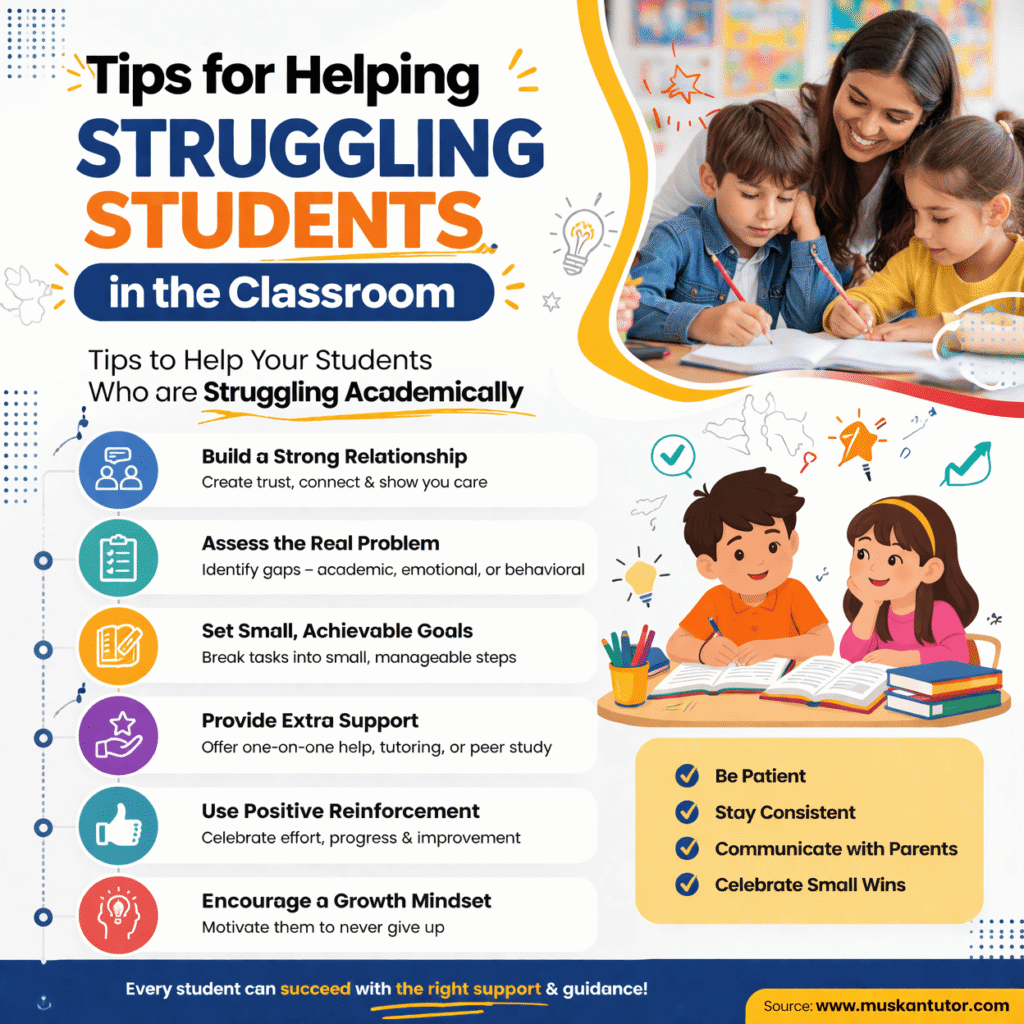
A positive classroom atmosphere is one of the most effective strategies for struggling students. Learners participating and taking academic risks are likely to be in an environment where they feel respected and safe.
Teachers need to be motivated to make students improve instead of criticizing. Minimal things like recognition of effort, constructive feedback, and applause for small successes can greatly increase confidence levels among the struggling students.
Also, flexible instruction enables educators to change teaching according to the students’ needs. This is a very necessary move towards knowing how to help struggling students without making them feel like an outcast among their peers.
Personalized Learning Approaches
Each student is a learner, and a unified approach to teaching comes short in most cases; this is because of the unique problems an individual faces. One of the most effective strategies that can be applied to struggling students is personalized learning, since it is based on personal strengths and weaknesses.
Educators are able to make changes to lesson plans, offer more practice materials, and employ visual or interactive methods of learning. Categorizing the complex issues into smaller, achievable phases can also assist the students in understanding the concepts easily.
When educators apply these personalized techniques, they naturally improve their approach to how to help struggling students in the classroom, making learning more accessible and engaging.
Encouraging Active Participation
Learning is very important in participation. However, many students struggling in academics hesitate to speak up due to fear of failure or embarrassment.
Participation should be promoted by the teachers through open discussions, group work, as well as interactive works. Engagement can be enhanced by asking simple questions and giving students time to think before responding.
Providing collaborative learning opportunities, students would have the chance to learn with peers, and that is another effective method of learning how to help struggling students in a classroom context.
Strengthening Teacher-Student Communication
Clear and open communication builds trust and improves learning outcomes. Teachers should regularly interact with students to understand their difficulties and provide guidance.
Instead of focusing only on results, educators should discuss learning processes and challenges. This approach helps in identifying gaps and applying better strategies for struggling students.
When communication is strong, students feel valued and supported, which directly contributes to improving their performance and addressing how to help struggling students in the classroom more effectively.
Using Technology and Modern Teaching Tools
Modern education tools can play a significant role in supporting struggling students. Digital resources, interactive videos, and online learning platforms make complex topics easier to understand.
Students who find traditional classroom methods difficult may benefit from alternative formats such as visual or audio-based learning. Technology also allows students to learn at their own pace, which is essential for those who need extra time.
Integrating technology into teaching methods is a practical step toward mastering how to help struggling students in today’s evolving educational environment.
Providing Regular Feedback and Assessment
Continuous feedback helps students understand their progress and areas of improvement. Instead of waiting for final exams, teachers should provide regular assessments and constructive feedback.
Feedback should focus on improvement rather than mistakes. This helps build confidence and motivates students struggling to keep trying.
When teachers consistently evaluate and guide students, they develop a deeper understanding of how to help struggling students in the classroom and create a more effective learning system.
Encouraging Parental Involvement
Parents play a crucial role in supporting their children’s education. Regular communication between teachers and parents ensures that students receive consistent support both at school and at home.
Parents should be informed about their child’s progress and provided with guidance on how to help struggling students outside the classroom.
A strong collaboration between teachers and parents creates a supportive ecosystem that benefits struggling students and enhances their learning experience.
Building Confidence and Motivation
Confidence is often the biggest challenge for students struggling academically. When students believe in their abilities, they are more likely to overcome difficulties.
Teachers should focus on positive reinforcement, goal setting, and motivation techniques. Recognizing effort rather than just results helps students stay encouraged.
Motivation plays a key role in implementing effective strategies for struggling students, as it drives them to improve and succeed.
The Role of Extra Academic Support
In some cases, classroom activities are not sufficient, and students might require some other academic support. Individualized attention and intensive learning may be achieved with the help of extra support, including tutoring.
In case students or parents are in need of additional assistance, a home tutor or an online home tutor who is reliable can make a big difference. Individual tutoring enables students to study at their own pace and receive personal guidance, which, in most cases, is often hard to get in a classroom setting.
This further protection enhances the general stance on the matters of how to help struggling students in the classroom by targeting the learning gaps to a greater degree.
Conclusion
There must be patience, understanding, and correct approaches in order to help students overcome academic difficulties. Teachers, parents, and tutors should collaborate in order to establish a positive and conducive learning atmosphere.
Teachers can effectively meet the needs of struggling students by concentrating on personalized learning, communication, motivation, and contemporary techniques of teaching. Understanding how to help struggling students is not just about improving grades but also about building confidence and lifelong learning skills.
If you are looking for professional support, MuskanTutor provides the best home tutor and online home tutor services for all classes and subjects. For expert guidance, contact info@muskantutor.com or WhatsApp +918920580968 and give your child the academic support they deserve.
FAQs
What is the best way to understand how to help struggling students in the classroom?
The best approach is to identify individual learning challenges, provide personalized support, and create a positive learning environment that encourages participation and confidence.
Why do some students become struggling students?
Students may struggle due to learning gaps, lack of motivation, low confidence, or external factors such as stress and distractions.
What are effective strategies for struggling students?
Effective strategies include personalized learning, regular feedback, interactive teaching methods, and strong teacher-student communication.
How can teachers support students struggling with studies?
Teachers can provide extra attention, simplify concepts, encourage participation, and use modern teaching tools to improve understanding.
How do parents contribute to how to help struggling students?
Parents can support learning at home, communicate with teachers, and provide a structured study environment for their children.
Is hiring a tutor helpful for how to help struggling students in the classroom?
Yes, a home tutor or online home tutor provides personalized attention and helps students overcome academic challenges effectively.